
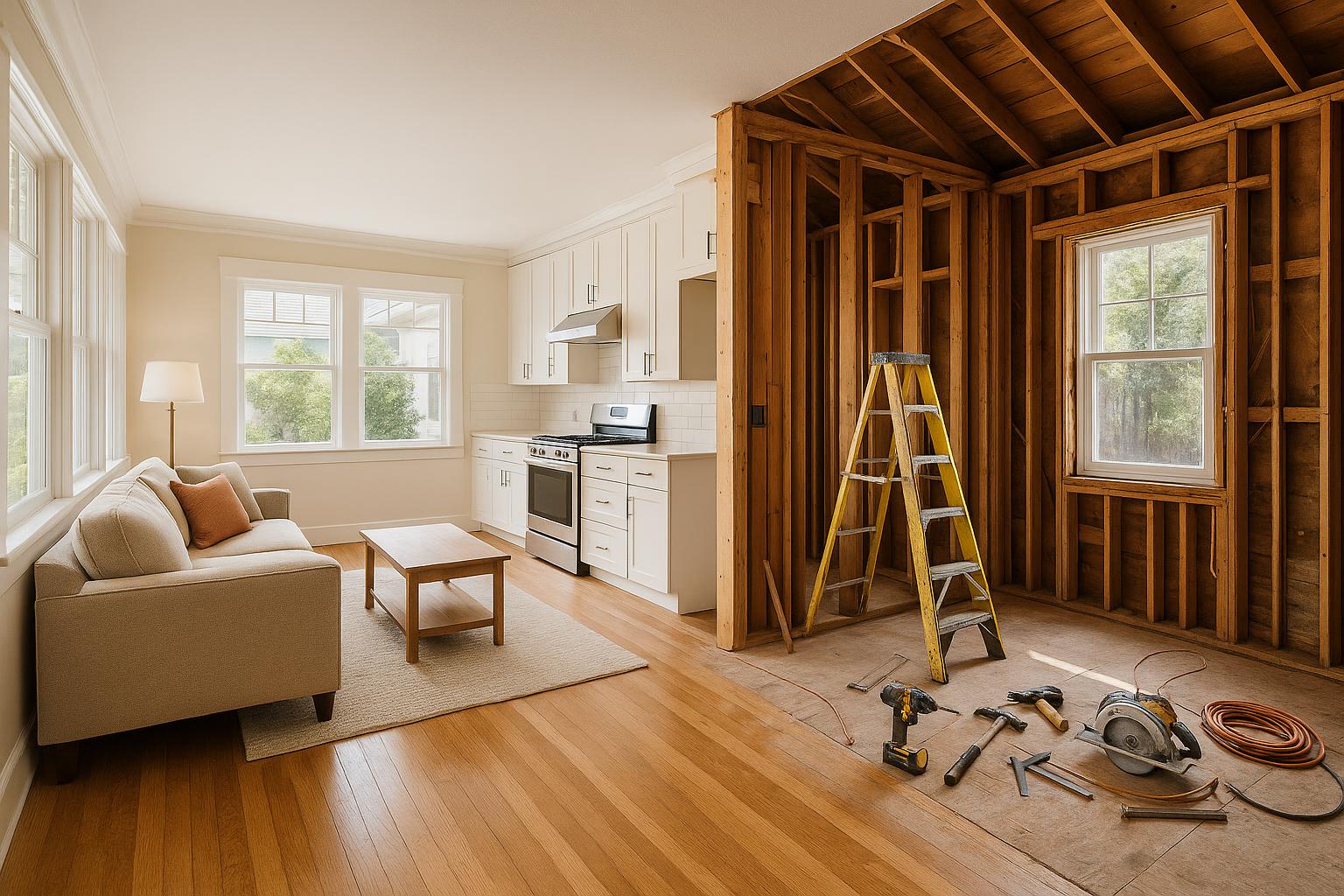
Why Whole-Home Renovations Feel So Overwhelming
You've been dreaming about it for years — tearing out the popcorn ceilings, opening up the floor plan, finally getting a kitchen that doesn't make you cringe. But the moment you start thinking about doing everything at once, the excitement turns into anxiety pretty quickly.
Whole-home renovations are one of the biggest investments a homeowner can make. In San Diego, where housing prices are high and many homes date back to the 1950s through 1980s, a full remodel can completely transform how you live — and significantly increase your property value. But without the right plan, it can also become a drawn-out, over-budget nightmare.
The good news? It doesn't have to be that way. Here's how to plan a whole-home renovation that actually goes smoothly.
Step 1: Get Clear on Your Goals Before You Touch Anything
Before you start browsing tile samples or tearing down walls, take a step back and ask yourself some honest questions:
- How long do you plan to stay in this home? If you're renovating to sell in a year or two, your priorities will look different than if this is your forever home.
- What's actually bothering you? Make a list of every pain point — the cramped bathroom, the dark hallway, the outdated electrical. Rank them from most to least important.
- What's your lifestyle? Do you work from home? Do you entertain often? Do you have aging parents who might move in? Your renovation should support how you actually live.
This clarity will save you thousands of dollars and weeks of indecision later. Many San Diego homeowners we work with at Cascade Home Builders say this initial planning conversation was the most valuable part of the entire process.
Step 2: Set a Realistic Budget (and Build in a Buffer)
Let's talk numbers. In San Diego, a whole-home renovation can range anywhere from $100,000 to $400,000 or more, depending on the size of your home, the scope of work, and the finishes you choose.
Here's how to approach your budget wisely:
- Get a ballpark estimate early. Talk to a contractor before you finalize your budget — not after. A good remodeling company will give you an honest range based on your goals.
- Allocate by priority. Put more of your budget toward the spaces you use most. Kitchens and bathrooms typically deliver the highest return on investment and the biggest quality-of-life improvement.
- Add a 15-20% contingency. Older homes in neighborhoods like North Park, Kensington, and Mission Hills often have surprises behind the walls — outdated plumbing, knob-and-tube wiring, or termite damage. A buffer keeps these discoveries from derailing your project.
The worst thing you can do is set a budget based on wishful thinking. Be honest with yourself and your contractor from the start.
Step 3: Decide Whether to Phase the Work or Do It All at Once
This is one of the biggest decisions in a whole-home renovation, and there's no one-size-fits-all answer.
Doing Everything at Once
Pros: It's usually more cost-effective because your contractor can coordinate trades efficiently. You only live through the disruption once. Design decisions are more cohesive when everything is planned together.
Cons: You'll likely need to move out temporarily. The upfront cost is higher. It can feel overwhelming to make hundreds of decisions in a compressed timeline.
Phasing the Renovation
Pros: You can spread out the financial commitment. You can stay in your home during most of the work. It gives you time to make decisions without pressure.
Cons: The total cost is often higher because of repeated mobilization and setup. Living in a construction zone gets old fast. Design continuity can suffer if you change your mind between phases.
For many homeowners in Hillcrest and La Mesa, doing it all at once — and staying with family or renting a short-term place — ends up being the smarter move financially and emotionally. But phasing works well if your budget requires it or if only certain areas of your home need attention right now.
Step 4: Choose the Right Contractor (This Matters More Than Anything)
Your contractor will make or break your renovation. Here's what to look for:
- Licensed and insured in California. This is non-negotiable. Verify their license through the Contractors State License Board.
- Experience with whole-home projects. Remodeling a bathroom is very different from coordinating a full renovation with structural changes, new electrical, plumbing, HVAC, and finishes across an entire house. Make sure your contractor has done this before.
- Clear communication. How quickly do they respond? Do they explain things in plain language? Do you feel comfortable asking questions? You'll be working with this team for months — the relationship matters.
- Detailed proposals. Vague estimates are a red flag. You want line-item pricing, a clear scope of work, and a realistic timeline.
- Local references. Ask for references from homeowners in San Diego who had similar projects. Better yet, ask to see the work in person.
At Cascade Home Builders, we walk every client through a detailed planning process before any demolition begins. We've found that the more time we invest upfront, the smoother everything goes once construction starts.
Step 5: Plan for the Disruption
Let's be real — living through a renovation is hard, even when everything goes according to plan. Here's how to make it manageable:
- Set up a temporary kitchen. If you're staying in your home, a microwave, mini fridge, and coffee maker in a spare room will keep you sane.
- Protect what matters. Dust gets everywhere. Seal off rooms that aren't being worked on, cover furniture, and move valuables to storage.
- Communicate with your neighbors. Construction noise, dumpsters, and work trucks are part of the deal. A heads-up goes a long way, especially in tighter San Diego neighborhoods.
- Stay flexible. Delays happen — materials get backordered, inspections take longer than expected, weather doesn't cooperate. Build some patience into your timeline.
Step 6: Don't Forget the Permits
In San Diego, most whole-home renovations require permits — especially if you're doing structural work, moving plumbing or electrical, or changing the footprint of your home. Skipping permits might seem like a way to save time and money, but it can create serious problems when you try to sell, refinance, or insure your home.
A reputable contractor will handle the permitting process for you, including submitting plans to the City of San Diego's Development Services Department and scheduling inspections. This is one of those things you absolutely want a professional managing.
The Payoff Is Worth the Process
A whole-home renovation is a big undertaking — there's no sugarcoating that. But when it's done right, the result is a home that fits your life perfectly. No more working around awkward layouts, outdated systems, or rooms you avoid because they're embarrassing.
San Diego homeowners who invest in thoughtful, well-planned renovations consistently tell us the same thing: they wish they'd done it sooner.
If you're thinking about a whole-home renovation and want to know where to start, reach out to Cascade Home Builders. We'll help you figure out what makes sense for your home, your budget, and your goals — no pressure, no sales pitch, just honest guidance from a team that does this every day.